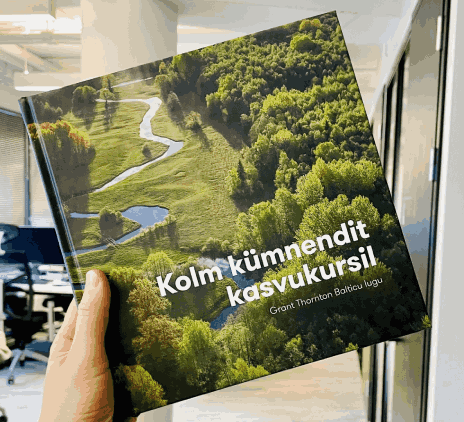
Our company celebrates its 30th anniversary in 2022. To store all the important milestones and great events and assure that our story would not be forgotten, we have published the book "Three decades on a path of growth. The story of Grant Thornton Baltic".
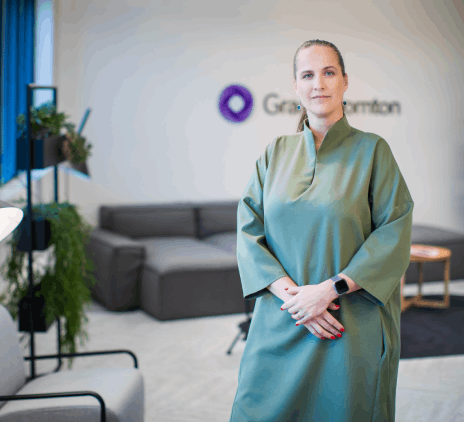
Kristel Tiits, a long-term employee of our company and Head of Legal, became a Partner of Grant Thornton Baltic. In total, we now have seven partners in Estonia and 15 in the Baltics.
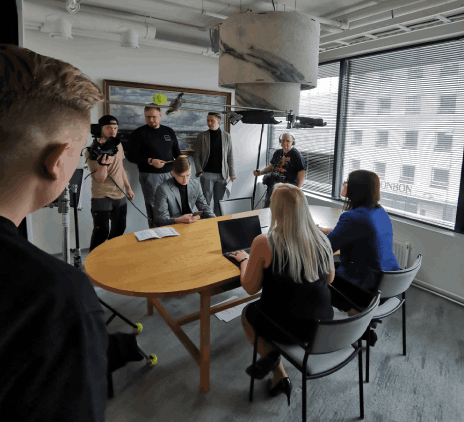
In our new videos, you can learn about Grant Thornton Baltic's main areas of activity - accounting, auditing and advisory - as well as our culture: yes, we are not dry numbers people, but we appreciate humor, and we are helpful and solution-seeking with both clients and colleagues.
In 2022, Grant Thornton’s Women in Business research has once again tracked the position of women in senior management across the world, and the progress towards gender parity in leadership.
Employers have to deal with three important aspects that lead to an employment relationship between employer and employee: job interview, pre-contractual negotiations and background checks (the last of these, of course, with employee consent).
Conversing with Tarmo Rahkama, his desire for challenges and excitement quickly becomes plain. He talks passionately about his career as a sworn auditor, doing packaging audits and being a track and field (athletics) umpire. The conservation also swings to the subject of the best recent theatre productions and tennis.
Grant Thornton partner and head of outsourcing Anastasia Borovaja has been working for more than 10 years to ensure that her day-to-day work offers an unforgettable customer experience and high-quality service while the company is also seen as an attractive employer.
To give people freedom and responsibility in their work, these values must be a part of organisational culture. The precondition is a working environment where failures and mistakes are allowed and instead of routine feedback there is also feedthrough, says Grant Thornton Baltic’s Head of People & Culture, Marge Litvinova, who shares her experiences and knowledge in more detail.
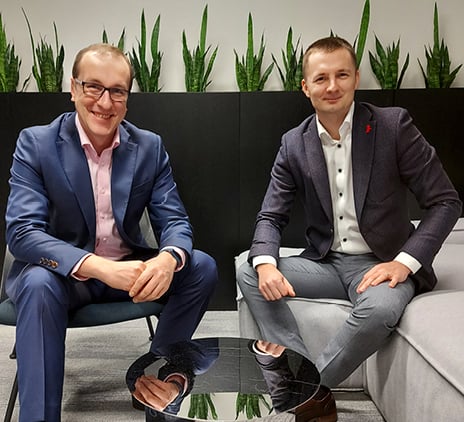
In autumn 2020, Grant Thornton Baltic expanded its circle of partners, giving two long-term employees in Estonia and two in Lithuania the opportunity to have a say at the highest level of the organization.
Riin Veidenberg, Grant Thornton Baltic's risk management services advisor, successfully passed the International Institute of Internal Auditors' Certified Internal Auditor (CIA) exam and on October 27 was awarded the qualification of a certified internal auditor.
Finding competent top-level specialists is getting harder, forcing companies to adapt on the employee-centred labour market and recruit already today for tomorrow, stated the Äripäev (daily business newspaper) produced radio programme “Kasvukursil”.
When it is time for the parent to return to work after childcare leave, they are entitled under the Employment Contracts Act to improved work conditions, including a pay raise, if conditions and salary level have improved for other employees in the meantime. Is the returning employee on par with others?
Spring is an appropriate time to talk about ice starting to break up. In this article, however, the ice means women, and the perspective is that the share of women in top management of the world’s companies is finally seeing brisk growth.
It is extremely important for managers to pursue self-improvement. As the saying goes: a fish starts rotting from the head. Unfortunately, managerial culture in Estonia is not at a level we can be satisfied with. We have many companies where money and financial results are managed but where the people are not. Actually, instead of money and results, it’s people who should be managed. If so, the good results will not be long in coming.
Although employer branding is seen as mainly the domain of personnel and marketing people, it isn’t only their function. Managers have just as important a role here, because it is managers who can leave employees with a good experience of the organisation as employer. Or the opposite – a negative experience, because Estonia has many organisations that have a substandard managerial culture and instead of leading people, they’re busy managing money and processes.
According to Michael Porter, whose book Competitive Strategy is one of the most highly regarded works on management, a company develops a competitive advantage over its rivals when it purposefully differentiates activities from others in order to create unique value.