Grant Thornton's Women in Business 2026 report reveals that 91.9% of mid-market leaders say they personally consider a company's gender equality initiatives when applying for roles, with two-thirds calling it a priority.
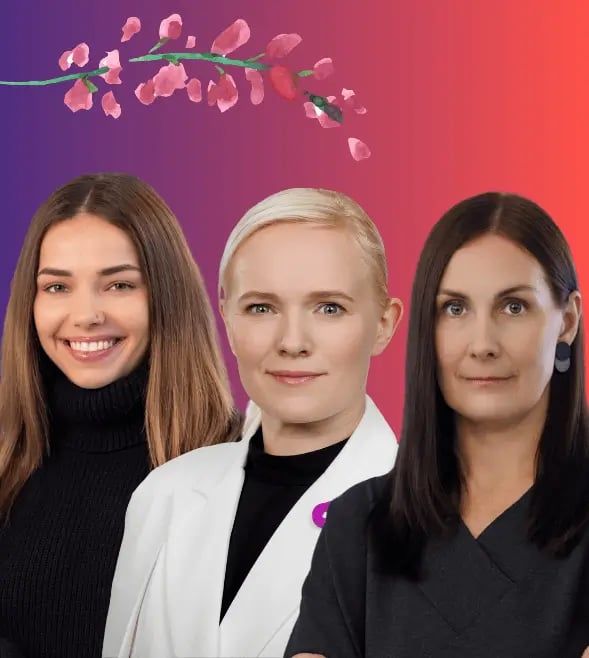
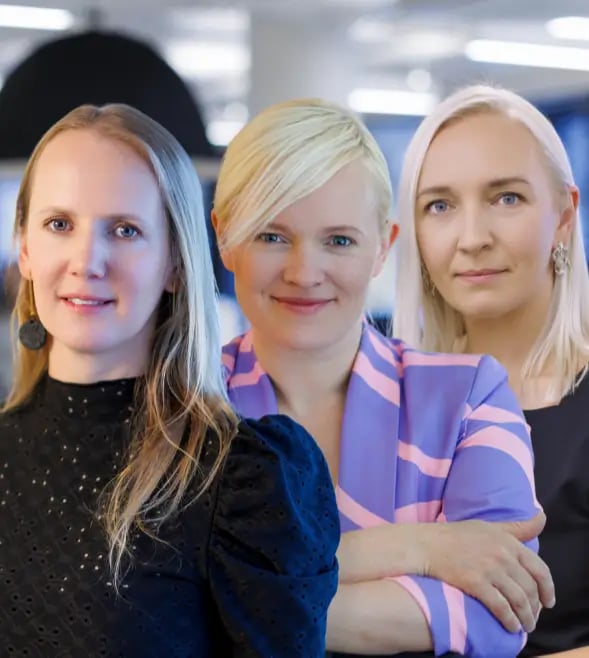
On International Women’s Day, the spotlight at Grant Thornton Baltic is on our female colleagues. We asked three of our energetic coworkers – Terje Liiv, Marge Litvinova, and Belinda Borodin – how they manage to balance an intensive workday with their exciting hobbies and much more. Read on to discover how these proactive women juggle multiple roles with such dedication!
This International Women’s Day, we shine the spotlight on our newest female leaders—this season, Grant Thornton Baltic’s Estonian office welcomed three new women partners. How did Gaily Kuusik, Terje Liiv, and Anni Vaiksaar reach senior management, and what unique values do they believe women can bring to leadership?
According to a global survey International Business Report, mid-market businesses consider inflation, cyber-attacks, and economic slowdown to be the main business risks.
Since 2003, the international network of business consultancies Grant Thornton has conducted an annual study to determine what percentage of seats on senior management is filled by women.
In 2022, Grant Thornton’s Women in Business research has once again tracked the position of women in senior management across the world, and the progress towards gender parity in leadership.
In the post-pandemic landscape, a new model of leadership will be needed to enable organisations to thrive. Engendering innovation, collaborating and communicating across the business, and adapting to change have become operational necessities, while empathy and inclusion are the keys to team performance.
The international business advisory network Grant Thornton has been conducting research on this topic for 17 years, and the results show that the number of female executives has gradually grown each year, but this year’s study revealed that only 31% of executives around the world are female.
World economic growth is slowing and it’s clear that this year will not be as good a year in the global economy as was last year. The results of a recent study show that companies' optimism regarding business success is slipping.
This year is the point where the economy peaked – it can’t get any better. We already see economic growth tapering off in Estonia, the EU and elsewhere. But will we lose our footing as we slide downhill or will we be able to softly glissade down the easy slopes?
Entrepreneurs believe the hard times are past and increasing turnover and profit will also lead many countries’ economic growth to faster recovery. A survey conducted by tax and business advisory firm Grant Thornton among business people in 36 countries found that business optimism is at a two-year high.
In the last few decades, the topic of female executives has received consistent attention in the industrialised West.
Businesses both in and outside Estonia are very optimistic about this year’s outlook. But I recommend taking the rose-coloured glasses off and committing to making investments this year in order to improve effectiveness.
What lies ahead for the hotel business: revolution or decline?
Money is a bigger motivator for female executives than for male counterparts