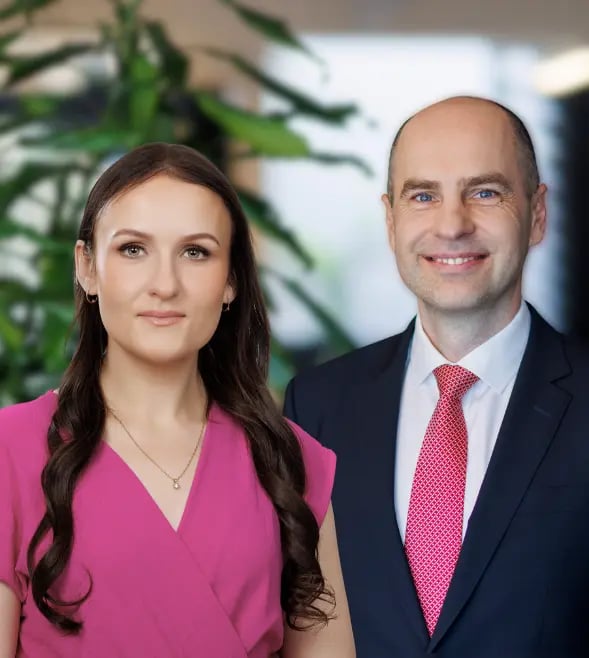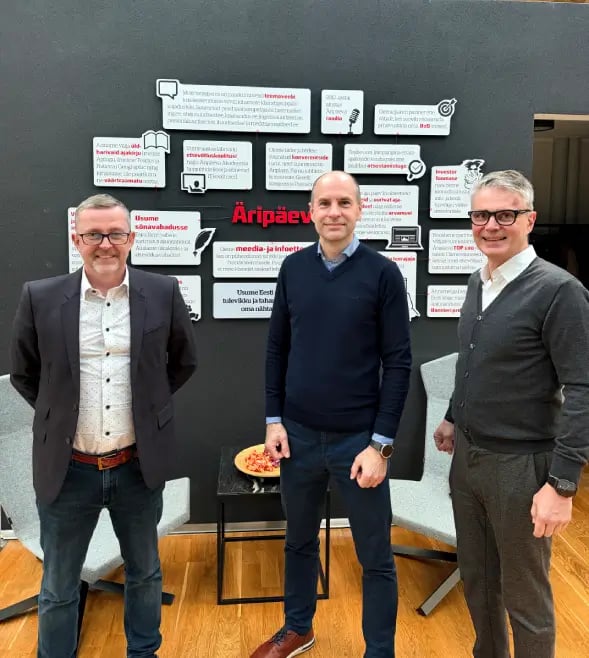
Selling and valuing a business: what attracts investors? Grant Thornton Baltic partner Mart Nõmper and M&A experts discuss Baltic market trends, strategic buyers, family business succession and ways to increase company value.
Filter insights by:
Popular topics
Featured insights
Is your company required to undergo an audit or review? Find out which thresholds apply in Estonia, Latvia and Lithuania, how audits differ from reviews, and when an audit is mandatory regardless of company size.
The new EAS 10 introduces changes to revenue recognition for goods sold with a right of return from 2027. Companies must estimate expected returns, recognise refund liabilities and document management estimates.
When you read about the draft ePrivacy Regulation it may appear as though all it does is regulate the use of cookies and manage direct marketing; but the draft ePrivacy Regulation also proposes more regulation of over-the-top (OTT) communications provides, such as Skype or WhatsApp.
Despite one of the main goals of the EU General Data Protection Regulation (GDPR) being to harmonise data protection law across the EU, it does allow the individual member states to introduce broad derogations concerning national security, the prevention of crime and the enforcement of civil claims, when fundamental rights to data protection are guaranteed and derogations themselves are necessary and proportionate.
Although it is cold as I am writing this, spring is here and summer is right around the corner. A number of important events are on the way – the wildly popular Game of Thrones wrapped up its last season and the GDPR celebrated first birthday. What is the temperature like in Estonia in the field of personal data protection – lukewarm, ice-cold or smoking hot?
How to protect your company? Five most important recommendations for ensuring cyber security. The biggest targets of these new brand of bandits are companies that own and process large amounts of data and companies whose cybersecurity measures are lagging behind the times.
A year has passed since the General Data Protection Regulation (GDPR) entered into force on 25 May 2018. The main purpose of the regulation is to give individuals more control over what data about them is processed. The GDPR also applies to employment relations where the employer processes personal data of employees.
The most talked about legislative piece last spring was undoubtedly the General Data Protection Regulation, or GDPR as it is known, which came in force 25 May 2018. As a regulation, it applies directly to all of the EU member states. Why did we need the GDPR, which if to believe popular opinion is an act of pointless bureaucracy, doesn’t improve the protection of privacy rights of individuals and increases the administrative burden of companies?
In the business world, success comes from focusing on your field and working your way to the top. But that takes time and dedication. So if you are just going into business or expanding, it is wise to think about what sorts of support services are worth outsourcing – what happens if your accountant or computer person is not sitting in the next room but works for an external service provider?
Estonian entrepreneurs will develop an opportunity to grow significantly only if they are able to expand to foreign markets, says Kuldar Väärsi, the CEO of defence contractor Milrem Robotics.
Grant Thornton Baltic advised Balti Spoon OÜ, one of the world's leading manufacturers of peeled and sliced veneer, on the acquisition of a Polish company Bracia Mrozik Sp. z o.o.
Spring is an appropriate time to talk about ice starting to break up. In this article, however, the ice means women, and the perspective is that the share of women in top management of the world’s companies is finally seeing brisk growth.
The last financial year was the best in the last six years for Grant Thornton: turnover for our company operating in more than 130 countries grew by nearly 10%, reaching 5.45 billion dollars. We have 52,686 employees, and their numbers were up 6.3%.
World economic growth is slowing and it’s clear that this year will not be as good a year in the global economy as was last year. The results of a recent study show that companies' optimism regarding business success is slipping.
Goods and services are purchased constantly online in Estonia, yet our online retailers have untapped potential – we are lagging a bit behind the European Union average in cross-border online retail. It is worth putting more effort into sales of electronic goods and services to consumers in other member states, especially given that the European Commission has and will continue to simplify cross-border e-commerce, including changes in the tax system.
Hundreds of companies are bought and sold each year in Estonia. In the case of bigger transactions, relying on assistance from transaction advisers has become the norm, although for the sake of total certainty, it’s a good idea to bring aboard an adviser even on smaller acquisitions.
Form INF 14, which needs to be submitted to the Tax and Customs Board, consists of several parts with different submission terms, the first of which is on 1 February 2019.
Amendments to the Occupational Health and Safety Act that came into force on 1 January 2019 will lead to a decrease in the administrative burden on employers.