From reporting periods starting 2024 onwards, the Corporate Sustainability Reporting Directive (CSRD) will require all large companies to report on sustainability policy and performance.
The European Union directive on transparent and predictable working conditions has been transposed into national law. The corresponding amendments come into force on 1 August 2022, but it would be a good idea for employers to start preparing for this date already.
The sample of Grant Thornton's recent interim report with comments has been prepared in accordance with all the latest amendments to IFRS and is a good assistant in preparing IFRS interim reports.
The Environmental, Social, and Governance (ESG) reporting landscape is evolving rapidly and will change even more so in the coming months and years, and as a result has become a focus of the GPPC.
In May, the latest Estonian company will become listed on Nasdaq First North, the alternative list of the Tallinn Stock Exchange – the digital product sale platform Punktid Technologies AS.
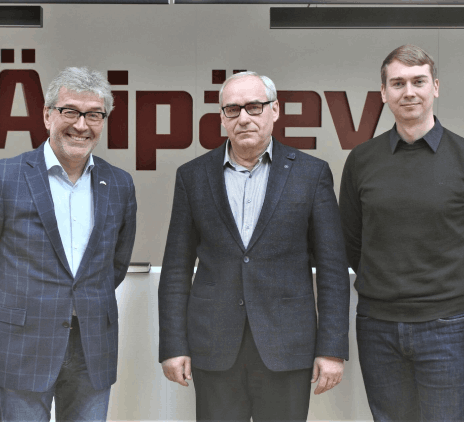
In every crisis, an optimistic view of the future should be combined with a bulletproof crisis plan that helps a business navigate the worst situations. A few simple tips help build a working strategy, said several experienced practitioners who were guests on the Äripäev business daily’s radio programme “Kasvukursil”.
On 22 December 2021, the European Commission introduced a draft of a minimum tax directive designed to impose on large corporations an obligation to pay at least 15% income tax on profit. The establishment of a minimum tax limits tax competition between countries and is one of the international measures for preventing tax avoidance.
The so-called Whistleblower Protection Act has raised many practical questions. Here are some of the most common questions that have been asked by clients of Grant Thornton Balticand the answers of our specialists.
In 2022, Grant Thornton’s Women in Business research has once again tracked the position of women in senior management across the world, and the progress towards gender parity in leadership.
The auditors of Grant Thornton Baltic audited the 2020 IFRS annual report of the public interest entity UPP Olaines OÜ consolidation group.
After leaping back strongly from the darkest days of the pandemic, the global mid-market could only manage a small additional step forward in the second half of 2021, as tracked by the Global business pulse, Grant Thornton’s index of health among mid-sized companies. At 1.2, the index score is now within sight of pre-COVID health levels (3.4), but there is still some way to go for a full recovery.
A whistleblower has to feel safe in order to have the courage to start shining the light on problem areas in an organization. An EU directive soon to come into force imposes specific requirements on companies to ensure that those who point out problems would not end up like martyrs.
In the beginning of the year, several tax changes were introduced in Estonia, Latvia and Lithuania.
From 1 January 2022, the Estonian Value-added Tax Act will have a new section, 291, setting forth the conditions on the basis of which taxable persons can reduce their tax liability on bad debts. This is a long-awaited addition to Estonian tax law that has previously been discussed but has not gone beyond the draft legislation stage.
From 2022, an updated regulation will take effect, regarding the methodology for determining transactions between related persons. Since it was adopted in 2006, Minister of Finance regulation no. 53 had been in force unchanged.
Late last November, trading of shares of one of the Estonia’s biggest real estate developers, Hepsor AS, began on the Nasdaq Tallinn exchange. Grant Thornton Baltic’s team of more than 10 internal and external specialists did its part to help Hepsor get listed, auditing the IFRS based financial reporting set out in the company’s listing prospectus.