Start-ups are playing an increasingly important role in the Estonian economy – about 550 start-ups are operating in Estonia, paying more than 3,700 people an average of around 2,200 euros a month in earnings, and employing hundreds of people outside Estonia.
In the business world, success comes from focusing on your field and working your way to the top. But that takes time and dedication. So if you are just going into business or expanding, it is wise to think about what sorts of support services are worth outsourcing – what happens if your accountant or computer person is not sitting in the next room but works for an external service provider?
Estonian entrepreneurs will develop an opportunity to grow significantly only if they are able to expand to foreign markets, says Kuldar Väärsi, the CEO of defence contractor Milrem Robotics.
Grant Thornton Baltic advised Balti Spoon OÜ, one of the world's leading manufacturers of peeled and sliced veneer, on the acquisition of a Polish company Bracia Mrozik Sp. z o.o.
The last financial year was the best in the last six years for Grant Thornton: turnover for our company operating in more than 130 countries grew by nearly 10%, reaching 5.45 billion dollars. We have 52,686 employees, and their numbers were up 6.3%.
World economic growth is slowing and it’s clear that this year will not be as good a year in the global economy as was last year. The results of a recent study show that companies' optimism regarding business success is slipping.
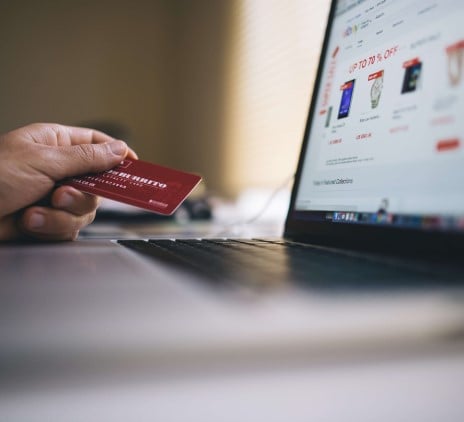
Goods and services are purchased constantly online in Estonia, yet our online retailers have untapped potential – we are lagging a bit behind the European Union average in cross-border online retail. It is worth putting more effort into sales of electronic goods and services to consumers in other member states, especially given that the European Commission has and will continue to simplify cross-border e-commerce, including changes in the tax system.
Hundreds of companies are bought and sold each year in Estonia. In the case of bigger transactions, relying on assistance from transaction advisers has become the norm, although for the sake of total certainty, it’s a good idea to bring aboard an adviser even on smaller acquisitions.
The European Union has adopted new rules on VAT that will simplify and facilitate e-commerce. The rules will come into effect in full on 1 January 2021, but companies that provide electronic services will be able to benefit from the rules already starting 1 January 2019.
It is extremely important for managers to pursue self-improvement. As the saying goes: a fish starts rotting from the head. Unfortunately, managerial culture in Estonia is not at a level we can be satisfied with. We have many companies where money and financial results are managed but where the people are not. Actually, instead of money and results, it’s people who should be managed. If so, the good results will not be long in coming.
This year, a number of large-scale purchase and sale transactions have provided much fodder for discussion in the media – Nelja Energia, Luminor and Utilitas are three examples. The large transactions always stand out, but this year has seen many mid-sized and small company acquisitions as well.
Although employer branding is seen as mainly the domain of personnel and marketing people, it isn’t only their function. Managers have just as important a role here, because it is managers who can leave employees with a good experience of the organisation as employer. Or the opposite – a negative experience, because Estonia has many organisations that have a substandard managerial culture and instead of leading people, they’re busy managing money and processes.
United Motors has purchased the distributor of Peugeot and Hyundai in Estonia. Grant Thornton Baltic provided advisory services for the transaction.
How to hold on to good employees? For starters, understand that employees may consider leaving, competitors try to outbid you for them, and employees have their own personal career goals.
Food synthesizers, halo environments and a number of other exciting gadgets seen on TV seem like an unattainable dream a Star Trek fan might have come up with. But for how long?
This year is the point where the economy peaked – it can’t get any better. We already see economic growth tapering off in Estonia, the EU and elsewhere. But will we lose our footing as we slide downhill or will we be able to softly glissade down the easy slopes?