From a taxation and accounting perspective, gift cards are not merely payment instruments. Their treatment depends both on the type of gift card and on whether the card is sold or given away free of charge. Therefore, now is a good time to revisit when and how gift cards should be taxed and how they should be properly recognised in accounting.
On 1 January 2026, amendments to Estonia’s Cybersecurity Act entered into force, transposing the NIS2 Directive into Estonian law. According to the Estonian Information System Authority (RIA), this increased the number of companies and institutions required to comply with cybersecurity obligations from around 3,500 to nearly 6,500.
The taxation of passenger cars in Estonia mainly depends on who owns the car, how it is used for business purposes, and whether private use is allowed. The Tax and Customs Board follows the principle that not only the actual use of the car matters, but also the possibility of private use.
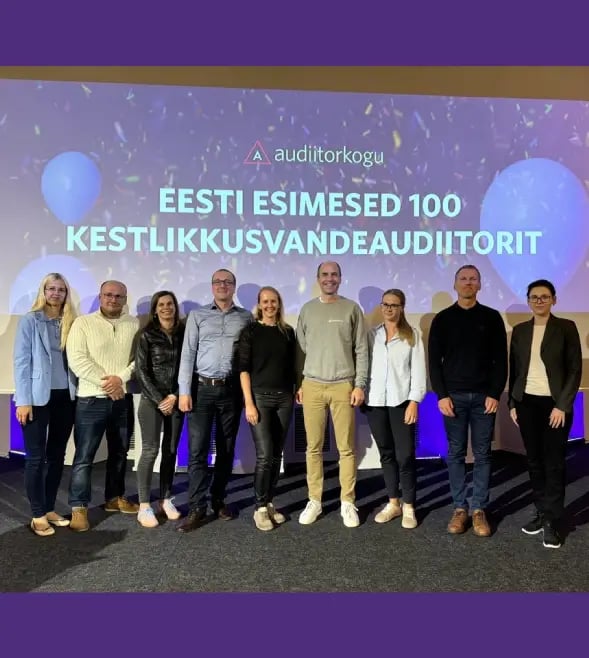
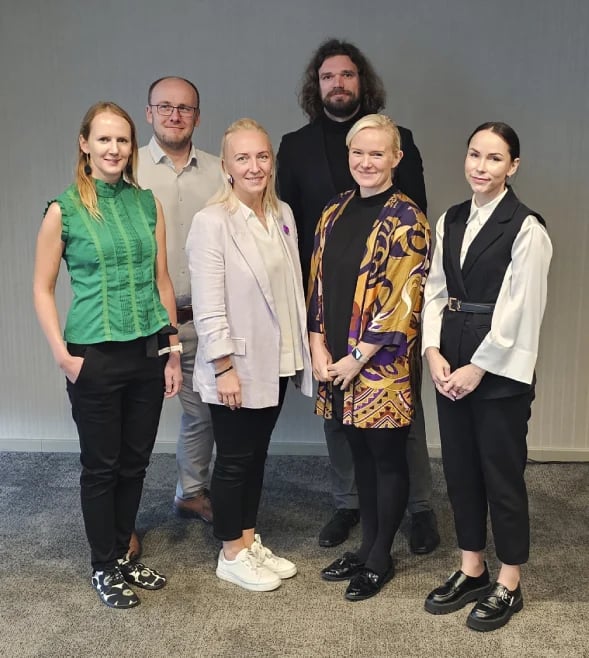
This fall, a record of six new partners joined Grant Thornton Baltic. Four of them are from our Estonian company and one each from Latvia and Lithuania. Now we have a total of 21 partners.
Starting 1 January 2024, a global minimum tax obligation is in effect for large multinational enterprise groups with consolidated revenue of more than 750 million euros in European Union member states and many third countries (such as UK, Switzerland, Canada, Australia, Singapore etc.)
On 25 September 2024, the Estonian government submitted a draft law on the defense tax to the Parliament, which introduces a temporary defense tax consisting of three components, including a 2% tax on corporate profits. Most companies will have to pay the defense tax for the first time on 10 September 2026.
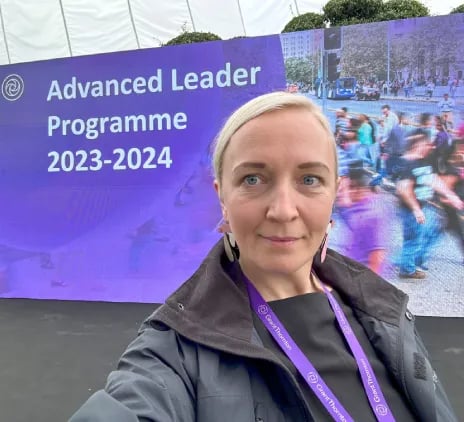
Grant Thornton pays great attention to training managers, and Kristel Tiits (Head of Legal) and I had the opportunity to participate in Grant Thornton International's year-long management training program, where one session took us to Vietnam.
Matters concerning evaluation of the creditworthiness of consumers have returned to the focus during the last year. Discussions revolve around consumers’ increased loan burden and share of loans in default; there is lobbying for additional support from the establishment of a positive credit registry, and the Financial Inspectorate has started getting tougher with fines on market participants who don’t abide by the rules.
The main goal of the channel is to give employees a possibility of confidentially reporting violations. Employees must have a way of doing so orally, in writing or both. It is considered important to consider the nature of the company and its workforce.
Those operating in the financial sector are bound by various laws along with requirements for internal audit arising from those laws. In addition, the Auditors Activities Act governs the provision of internal audit service, defining who is allowed to be engaged in the professional activities of an internal auditor.
Pursuant to amendments that entered into force last year, the Commercial Register can fine or compulsorily dissolve those who are late filing an annual report. Compulsory dissolution can be done if the company lacks registered assets (i.e. no assets evident in the land register, ship register, Commercial Register or Estonian securities register), is not a party to any current judicial proceedings, criminal enforcement proceedings or tax disputes.
Anyone who has to consider any aspect of cybersecurity at their company has probably heard the sonorous sounding terms NIS 2, DORA, E-ITS or even ISO 27001.
E-invoices celebrate their first minor anniversary – submitting invoices to the public sector in this format has been obligatory for five years, while technical support for e-invoicing has existed on the market for more than 10 years. But the hope that the private sector would organically embrace the state’s role model has not come to fruition.
The rules on the contact person underwent a facelift as part of company law reform, the majority of the amendments of which came into force on 1 February 2023.
Last year, an amendment to the Commercial Register Act was passed, which meant more fines for companies for the purpose of making the Estonian business environment more transparent.
In their work, internal auditors often come across a situation where clients want to have an internal audit done in their organization, but since they have no previous contact with an internal audit service, they have a number of questions.
A high-quality accountant who uses modern technological solutions – up to and including AI – can do more for a company than ever before. An accountant can be closer to a CFO’s skillsets than a data entry role.
Grant Thornton Baltic provided consultation to OptiPRO OÜ, which operates a retail chain of optometry stores under the brand Pro Optika and acquired the holding company of the Pere Optika chain, Optiland Eesti OÜ. After receiving a merger permit from the Competition Authority, the transaction was completed on June 10, 2024, and OptiPRO OÜ acquired a stake in Optiland Eesti OÜ.
Where to start if your company doesn’t have a human resources director and HR policy, and on top of it, has a negative employer net promoter score? Grant Thornton Baltic’s HR director Marge Litvinova and recruiter Kätlin Treima share some valuable experience.