Effective 1 April 2022, when the system for taking child leave will change in the Employment Contracts Act, all parents of children under 14 years of age will be entitled to 10 working days of paid child leave per child under 14.
Under the Occupational Health and Safety Act, employers must compile a risk assessment of the working environment. It is mandatory for employers who have at least one employee (security institutions excluded).
The coronavirus restrictions have put many employers in a very difficult situation. When turnover is down, it’s time to analyse what would lead the company through the difficult times – applying for a new salary compensation from the government, temporary pay cuts, leave or layoffs.
The coronavirus crisis, which started a little more than a year ago, changed quite a few things in employment relationships. One of the most important changes has been the widespread use of working from home offices. Provided that the nature of the job had some degree of compatibility with the format, employees were allowed to work remotely by companies and organisations where this had not previously been the practice.
The employer has an obligation to ensure the safety of its employee, but in the conditions of a home office, a legal requirement may become absurd, it was stated on Äripäev raadio’s ,,Kasvukursil’’.
Amendments to the Labour Market Services and Benefits Act (hereinafter LMSBA) and the Unemployment Insurance Act create the possibility of temporary employment, in other words, accepting temporary job offers during registered unemployment, plus unemployment allowance and unemployment insurance benefit increase. Grant Thornton Baltic's legal manager Kristel Tiits and legal adviser Lee Laanemäe explain the details in their article.
Only a few companies have included an option of a virtual shareholders’ general meeting – e.g. using an instant messaging service or electronic voting application. Grant Thornton Baltic legal manager Kristel Tiits explains how to rectify this situation.
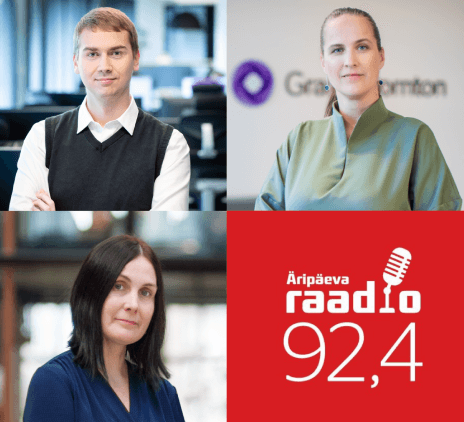
The government aid measures to alleviate the corona crisis have become rather confusing for entrepreneurs. According to Äripäev's radio program "Kasvukursil", there are in fact several ways for labour cost savings. In the studio were legal manager Kristel Tiits, HR manager Marge Litvinova and IT manager Arko Kurg from Grant Thornton Batic.
A subsidy to employees affected by the COVID-19 crisis was established by order of Estonian Government from March 23rd, 2020 „Employment program 2017-2020 . To apply for the employee subsidy the employer must meet 2 out of 3 requirements. What are those requirements and what action must employer take? Grant Thornton Baltic legal adviser Lee Laanemäe and legal manager Kristel Tiits explain the subject and give recommendations for further steps.
Estonia declared a state of emergency (defined in national law as “emergency situation”) on 12 March 2020 and this affects the rights and responsibilities arising from employment relationships. What steps can an employer take to slow the spread of the virus while keeping the work processes flowing, and what are an employee’s rights to refuse to come to work? Grant Thornton Baltic specialists Kristel Tiits and Lee Laanemäe give overview and suggestions on how to best deal with the current situation.
In simple terms, copyright is the right over intellectual property. Copyright is gained automatically and requires no separate registration or other completion of formalities. Grant Thornton Baltic specialists Kristel Tiits and Lee Laanemäe are explaining the details in depth in their article.
When it is time for the parent to return to work after childcare leave, they are entitled under the Employment Contracts Act to improved work conditions, including a pay raise, if conditions and salary level have improved for other employees in the meantime. Is the returning employee on par with others?
Temporary employees are usually employed under fixed-term employment contracts, and it is important to note the differences compared to contracts with indefinite term.
According to the Employment Contracts Act, there are two grounds for cancelling an employment contract: ordinary and extraordinary. The easiest option is agreement between the parties, but what are the other options? How to dismiss someone who drinks on the job? Read more from our legal manager Kristel Tiits's article.
The midsummer holidays of St. John’s Day and Victory Day are getting closer and it is the right time to look at working on public holidays. When do employees have the right to a shortened workday or a day off work? What are the exceptions? To prevent misunderstandings, employers should think about such situations early on.
A year has passed since the General Data Protection Regulation (GDPR) entered into force on 25 May 2018. The main purpose of the regulation is to give individuals more control over what data about them is processed. The GDPR also applies to employment relations where the employer processes personal data of employees.