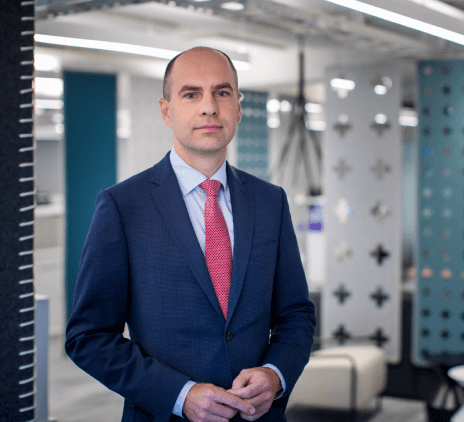
COVID-19 led to a crisis that has accelerated the changes that were actually taking place even before the so – called era of social distancing. Those with the automation and digital sales channel in the DNA of their business model are emerging stronger from the crisis than before. Among others, the race for the rest of the market is likely to begin. Read more about the topic in an article by Grant Thornton Baltic's Legal and Financial Manager Marko Rebane.

Amendments to the Labour Market Services and Benefits Act (hereinafter LMSBA) and the Unemployment Insurance Act create the possibility of temporary employment, in other words, accepting temporary job offers during registered unemployment, plus unemployment allowance and unemployment insurance benefit increase. Grant Thornton Baltic's legal manager Kristel Tiits and legal adviser Lee Laanemäe explain the details in their article.
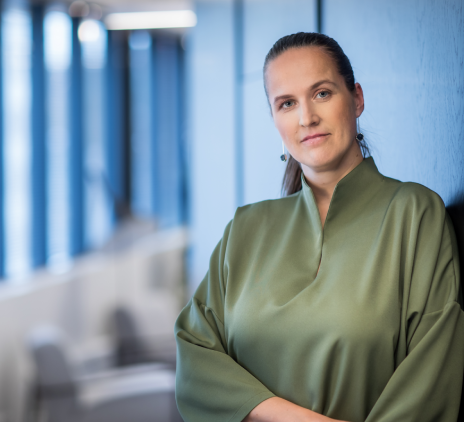
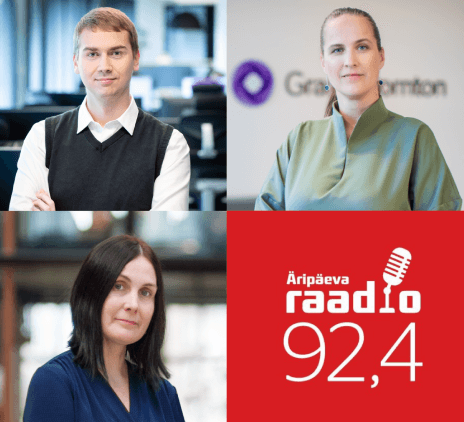
Remote work due to the coronavirus in companies is becoming a new positive trend, which is difficult to reverse, but both companies and employees will benefit from adapting to it, according to Äripäev’s radio program “Kasvukursil”. Grant Thornton Baltic's HR manager Marge Litvinova, IT-manager Arko Kurg and Partner of digital services Vladimir Rüntü discuss the plusses and minuses and possibilites and threats of working in different places such as the office, home offive or office abroad.
Businesses in various sectors do not have a positive outlook for their turnover forecasts due to the corona crisis. As a result, they may have an extra incentive to take the uncomfortable journey and start collecting bad debt. It may often seem that the only effective way to satisfy claims is to take legal action, but before filing a statement of claim you should consider other and less costly options. Grant Thornton Baltic's legal adviser Edward Otsa opens the subject further.
There are different reasons for drawing up a business plan and the target groups can vary as well. Detailed business plans are compiled when starting a business or expanding it, entering the market with new services or products and raising capital from investors or lenders to execute your strategies. Grant Thornton Baltic financial advisers Mikk Mägi and Raili Ilves write about the importance of business plan and what are the key points in the plan.
Auditors, accountants and other white-collar workers have recently been working mainly from home offices. We can expect that more and more audits and accounting procedures will be done without actually meeting face to face. Grant Thornton Baltic partner and sworn auditor Mart Nõmper discusses in his article how has this new work organization affected us and what is to be expected in the near future?
The amendment of Bankruptcy Act entered into force, where the commencement of the term of the obligation to submit bankruptcy petition shall be suspended for the time of emergency situation due to coronavirus and two months thereafter. Aet Sallaste, head of legal services in Grant Thornton Baltic explains who are concerned by the amendment of the Bankruptcy Act.
On February 1st 2020, remote authentication was introduced for notarial transactions, which is equivalent to ordinary notarial authentication, i.e. authentication in the presence of a notary. Remote authentication as an innovative solution is a notarial act conducted via a video bridge between Estonian notary and an Estonian or an e-resident. Grant Thornton Baltic legal adviser Brigitta Jõgi opens the subject further.
The Accounting Standards Board has ruled that subsidy paid by the Unemployment Insurance Fund should be recognised as government grant as treated in Accounting Standards Board Guideline (ASBG) 12, “Government Grants“. How to account for the Unemployment Insurance Fund's temporary subsidy? Grant Thornton Baltic sworn auditors Kristiine Villemi and Mart Nõmper explain the subject further.
In a crisis, companies need to be able to respond quickly to change and to meet the needs of their employees, customers and partners, while managing the company's financial and operational challenges. Grant Thornton Baltic's Chief Internal Auditor Kai Paalberg names 5 top priorities that all companies should concentrate on when dealing with the crisis management.
Reorganization is being used to help a company that has temporarily become insolvent, for example due to the current pandemic and crisis. It is important to emphasize that a company can be reorganized if the business model is sustainable, and the difficulties are temporary. Grant Thornton Baltic partner Artur Suits opens the subject further in his interview.
The government has approved a package of measures to mitigate the initial stage of the crisis caused by COVID-19. The measures also include paying taxes, e.g. suspension on mandatory pension fund payments, relief on social tax payments, interest payments and the payment of tax liabilities in instalments.
Only a few companies have included an option of a virtual shareholders’ general meeting – e.g. using an instant messaging service or electronic voting application. Grant Thornton Baltic legal manager Kristel Tiits explains how to rectify this situation.
The government aid measures to alleviate the corona crisis have become rather confusing for entrepreneurs. According to Äripäev's radio program "Kasvukursil", there are in fact several ways for labour cost savings. In the studio were legal manager Kristel Tiits, HR manager Marge Litvinova and IT manager Arko Kurg from Grant Thornton Batic.
Estonia has been in a state of emergency for a month now, which has limited the work and regular routines of businesses and individuals alike. Sports clubs and entertainment centers are closed, and people are forbidden to visit shopping centers. Accordingly, businesses experience many disruptions in their usual business routines and activities. Under certain conditions, it is possible to rely on § 103 (2) of the Law of Obligations Act (hereinafter LOA), which establishes force majeure. Grant Thornton Baltic legal adviser Brigitta Jõgi explains when force majeure can be applied to the situation.
A subsidy to employees affected by the COVID-19 crisis was established by order of Estonian Government from March 23rd, 2020 „Employment program 2017-2020 . To apply for the employee subsidy the employer must meet 2 out of 3 requirements. What are those requirements and what action must employer take? Grant Thornton Baltic legal adviser Lee Laanemäe and legal manager Kristel Tiits explain the subject and give recommendations for further steps.