On 26 February 2025, the European Commission (EC) released a new package of proposals (the Omnibus) to amend some key pillars of the European Green Deal. The overall goal of the Omnibus is to reduce reporting burdens, particularly for smaller and mid-sized entities, and increase efficiency in sustainability reporting.

In recent months, there has been much discussion about reducing the reporting burden of sustainability for companies and the European Commission's desire to simplify reporting.
On 26 February, the European Commission released significant proposals for easing the European Union’s sustainability rules. Called the Omnibus Package, the proposals covers the Corporate Sustainability Reporting Directive (CSRD), the Corporate Sustainability Due Diligence Directive (CSDDD) and EU Taxonomy regulations.
Companies are running out of time to start this year’s ESG report process – in fact, a business starting today might not make it in time. “That doesn’t mean they should just forgo submitting a report. It’s worth making the effort and getting at least half of it done,” said Grant Thornton Baltic partner and Head of Audit and Assurance Services Mart Nõmper.
It is becoming more accepted that companies should not only focus on their own main goal – earning a profit – but also consider the environmental and social impact of their activities.
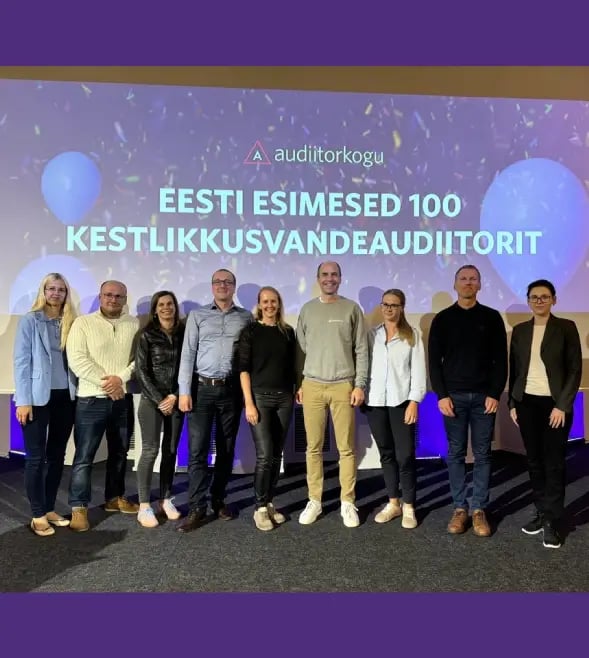
2025 is the first time that public interest entities will be required to prepare a sustainability report – which must be validated by an auditor – for the preceding year. Nine of Grant Thornton Baltic’s auditors were recently certified to audit sustainability reports, which will allow our network to provide service to many businesses and organisations subject to the obligation.
From reporting periods starting 2024 onwards, the Corporate Sustainability Reporting Directive (CSRD) will require all large companies to report on sustainability policy and performance.
The Environmental, Social, and Governance (ESG) reporting landscape is evolving rapidly and will change even more so in the coming months and years, and as a result has become a focus of the GPPC.
COP26’s goal was to deliver radical change to save our planet. In the long term, there are good reasons to be hopeful.
Sustainability is receiving increasing attention in both business plans and the speeches of politicians. Grant Thornton also focuses on sustainability issues in advising organizations and we are happy to share our experiences and thoughts with you.
The mid-market’s real prioritisation of sustainability not only reflects the growing expectation of stakeholders but the forward-thinking nature of this entrepreneurial segment. But few companies have made significant progress and many still face significant barriers.
After leaping back strongly from the darkest days of the pandemic, the global mid-market could only manage a small additional step forward in the second half of 2021, as tracked by the Global business pulse, Grant Thornton’s index of health among mid-sized companies. At 1.2, the index score is now within sight of pre-COVID health levels (3.4), but there is still some way to go for a full recovery.
Running a business in the most profitable manner possible takes smart decisions. Data – and including data in the decision-making process – are an inseparable part of this, panellists on the Äripäev radio programme “Kasvukursil” said.
Having data protection affairs in order at a company ensures reliable and trustworthy relations with businesspartners and a stronger position at the negotiating table. On the other hand, problems can mean fines running into the millions of euros even long after the issues are resolved.
Something that family businesses should consider besides earning a profit is maintaining mutual relations between family members and devoting attention early on to questions of succession if the business is to stay in the family.
In the post-pandemic landscape, a new model of leadership will be needed to enable organisations to thrive. Engendering innovation, collaborating and communicating across the business, and adapting to change have become operational necessities, while empathy and inclusion are the keys to team performance.