Almost every application employees submit to the labour dispute committee includes a claim for compensation for non-material damage, according to the committee chairs, as described by the Director General of the Labour Inspectorate.
There are several reasons: labour disputes are increasing, a challenging economic climate is straining relationships, and employees are more aware of their rights. Artificial intelligence may also play a role.
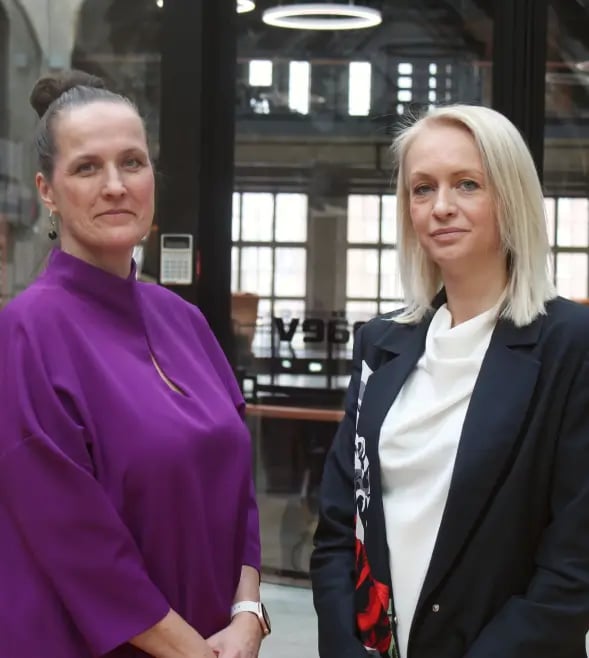
In the programme “Kasvukursil”, Labour Inspectorate Director General Kaire Saarep and Kristel Tiits, Head of Legal Advisory at Grant Thornton Baltic, discussed which employer–employee disagreements reach the labour dispute committee, recent cases, and how to terminate employment contracts lawfully.
Case: employee secretly recorded conversations
An employee in a manufacturing company secretly recorded colleagues to prove long-term workplace bullying. While the language used may have been informal or uncomfortable, no negative statements about the employee were identified.
The employee had also not submitted any formal complaints during that time. The committee found no evidence of bullying.
Labour disputes reflect the health of the economy
According to Saarep, the rise in labour disputes in recent years signals a weak economic situation. Redundancies stand out clearly, and employees are also claiming unpaid wages.
“Companies are struggling and may not even contest claims. They admit difficulties, accept the claims, and promise to pay over time. Or the company may already be heading towards bankruptcy.”
“Challenging a redundancy is generally not financially beneficial,” Saarep noted. If the employee wins, they receive compensation for unlawful termination but must return the redundancy payment. In many cases, the amounts are similar.
Tiits shared a recent example where a company restructured and made an employee redundant. The employee challenged the decision, but the committee found it difficult for the employee to assess the company’s financial situation. The case ended in a compromise, and the redundancy remained valid. A claim for non-material damage was also included.
Case: internal disorder in the company
An employee was tasked by the owner to develop an app for the owner’s relative, while their direct manager prioritised other work. The employee received no responses or tools for months.
The employer later dismissed the employee for alleged reputational damage, although the app was eventually completed by others. The dismissal was not lawful.
Labour dispute committees are under growing pressure
Case materials have become much more extensive. “The volume of evidence is already overwhelming,” Saarep said. This is driven by increased awareness and AI use.
“Employees use AI to draft complaints of 20–30 pages. The language is polished, but often lacks real evidence,” Saarep explained. This makes it difficult for committee chairs to identify the actual claims and facts.
Tiits described a case where an employee used AI to produce dozens of pages of text: “There were references to Supreme Court rulings that were not even relevant. When we talked about one issue, the text addressed something entirely different.”
This increases legal costs, as employer representatives must still review all AI-generated material. Tiits added that AI likely encourages employees to include claims for moral damage based on subjective feelings of injustice.
Case: termination cost the employer €27,000
An employer improperly terminated an employee returning from parental leave on their first day back, citing redundancy. The duties were simply reassigned.
The committee declared the redundancy invalid, costing the employer seven months’ salary.
Claim amounts are increasing
“Claim amounts in labour disputes are rising,” Saarep said. In one case where €27,000 was awarded, the claim was €46,000. In another recent case, a claim started at €2,000 but grew to over €70,000. Some claims have even reached millions.
However, a high claim does not mean it will be awarded. Still, awarded amounts have increased over time.
Case: dispute over political views
A conflict between two kitchen employees escalated due to opposing political views. The case reached the committee and ended in a compromise. Both parties acknowledged mutual violations.
Recommendations to prevent and win labour disputes
- Decisions are based on facts. Assess the situation as objectively as possible and document events precisely.
- Start documenting when you sense the employment relationship is deteriorating—not the day before termination.
- Hold check-ins during probation. Document areas for improvement and offer mentoring. Avoid relying on verbal feedback.
- The purpose of a warning is to allow time for correction. Communicate shortcomings constructively, not threateningly, and document them.
- Maintain order in the organisation. Respond to employees, set priorities, and define budgets and team sizes.
- Assume conversations may be recorded. Consider both content and tone. Courts accept recordings as evidence.
- When making redundancies, offer alternative roles if available. Even seemingly unsuitable roles should be offered.
- Consider carefully whether a non-compete clause is necessary. Define compensation, scope, and competitors clearly.
Good to know
If an employee terminates a contract due to a serious employer breach and this is justified, the employer must pay three months’ compensation.
What if no employment contract is signed?
- Some companies still operate without contracts. A photo from a construction site does not prove employment. If salary agreements lack evidence, courts may rely on market averages.
- If you are already working without a contract, document the agreement. Even a written message confirming pay can serve as evidence.
Case: failure to offer alternative role
In a public institution, an employee was made redundant without being offered vacant positions listed in the organisational structure.
The argument that roles were not intended to be filled was not accepted. Available roles must be offered.