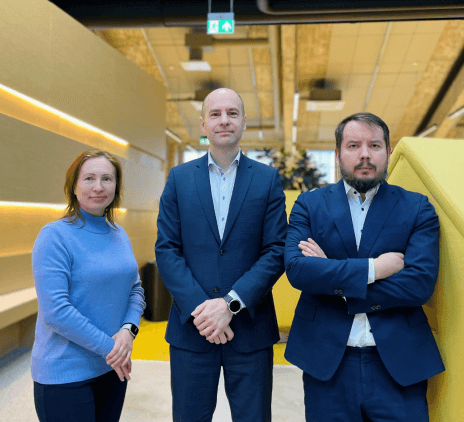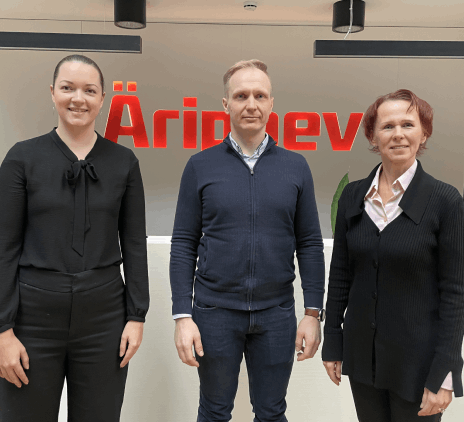
Financial services are one of the most strictly regulated business areas. It is to be expected that every financial service provider must have an internal auditor, be it a paid staff member or outsourced service. ESTO Group, a credit provider founded in 2017 that expended to Latvia and Lithuania in 2021, went the outsourcing route and partnered with Grant Thornton Baltic for internal audit services.
Filter insights by:
Showing 16 of 275 content results
It’s said it takes years to build trust but just a moment to destroy it. The dictum should be taken especially seriously in the financial sector where big sums of money hang in the balance along with the trust of clients, partners and supervisory authorities.
Employees are the greatest asset of any company, upon which competitive advantage is built - but they are also one of the largest cost factors. Every business leader should think about on whether we are doing all we can, to preserve this investment and whether we are making the most of our employees' potential.
What do Mauritania, Kosovo, Moldova, Iraq, Kenya and Kyrgyzstan have in common? Answer: the e-Governance Academy has provided advisory services to them and tens of other countries in transition, helping local government institutions and NGOs efficiently develop electronic public services and make democratic processes better.
In the end of 2022, Grant Thornton Baltic received the Partner Excellence Award from its cooperation partner, the global business services provider ADP, for 15 years of excellent cooperation in payroll processing for ADP clients in the Baltic countries.
This November, the Nasdaq Tallinn exchange’s alternative market First North started trading of the shares of the only Baltic pharmaceutical company J. Molner. Grant Thornton Baltic auditors had an important role in laying the groundwork for J. Molner’s market debut.
Tartu is nicknamed the city of good ideas. In Grant Thornton Baltic’s office in Tartu city centre there are not only good ideas but good specialists, satisfied customers and high-quality services.
Grant Thornton Baltic's transaction advisory team helped OÜ Rannu Seeme develop the conditions for the exit of the partner, including advising on the execution and formalization of the transaction.
Although salary isn’t unimportant if you want to attract talent, you need to offer opportunities for growth and think through the details of the recruitment process, using the services of an external expert if need be.
With everything else that is happening in the world, the pandemic era is starting to fade from memory. But remote working is here to stay. That is borne out by the new Occupational Healthcare and Safety Act that entered into force on 19 November 2022, which lays down a more specific framework for employee and employer responsibilities in remote work arrangements.
Up to 30 December 2021, according to subsection 390 (4) of the Commercial Code it was required that a branch of a foreign company has to be liquidated before deletion from the Commercial Register, with all of the stages necessary for liquidation to be followed: notification of creditors, satisfaction of creditors’ claims, preparation of a final balance sheet, etc.
Most annual reports have by now been submitted and the Commercial Register is now checking whether companies’ equity meets the minimum net assets requirement arising from legislation. What does this mean for companies?
If a company lacks its own HR manager or recruitment specialist, now is not the best time to look for one, because a recruiter is one of the most sought-after and thus most heavily advertised positions on the job market.
The Commercial Register Act will enter into force in three stages: the general date of entry into force is 1 February 2023, but the amendments concerning the maintenance of a list of shareholders and a list of building association members will enter into force on 1 September 2023, while the amendments concerning, among other things, the reservation of a business name and the making of entries on a specified date will only enter into force on 1 March 2024.
The audit requirement recently applied to crypto companies will notably increase the workload of auditors who are expected to provide a service that is largely lacking in Estonia currently.
On 12 May 2022, the Government of the Republic approved a draft amendment to the Local Government Act that makes internal audit a requirement in local governments. At least once every four years, an internal audit must be conducted to verify that the internal control system meets certain requirements.