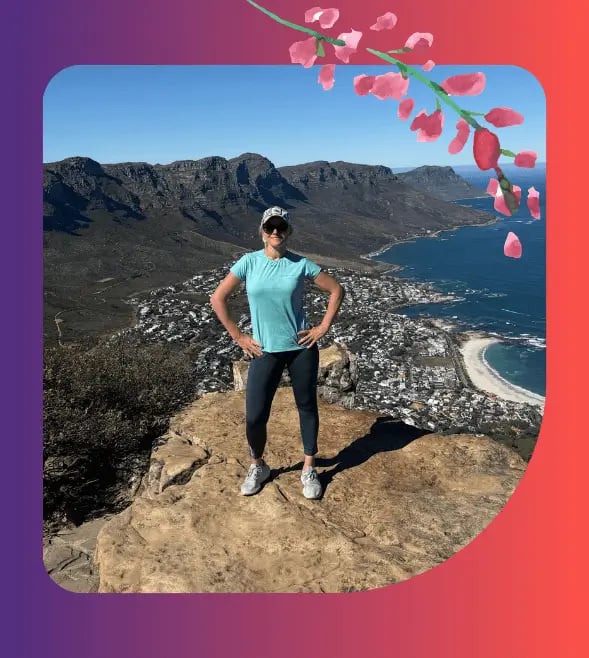
![Belinda Borodin]() Belinda Borodin, who works as Head of Information Security, has a heart that belongs to sport. When the office door closes behind her at the end of the workday, you will soon find Belinda in the gym, where she coaches a sport that is still relatively uncommon in Estonia. However, her passion for the field suggests that its growth in recognition and popularity may not be far off.
Belinda Borodin, who works as Head of Information Security, has a heart that belongs to sport. When the office door closes behind her at the end of the workday, you will soon find Belinda in the gym, where she coaches a sport that is still relatively uncommon in Estonia. However, her passion for the field suggests that its growth in recognition and popularity may not be far off.
What do you do outside your main job?
Outside my main role, I serve as a board member and coach at TalTech Cheerleaders (TTC). I am the head coach of two teams and, in practice, I run training sessions almost every evening after work for both youth and adults. Occasionally, I try to make it to training myself as well.
I joined the TTÜ Tantsutüdrukud & Saltopoisid (former name) team more than ten years ago, when my high school physics teacher recruited people to join.
![Belinda Borodin]()
Fotograaf: Rain Jüristo
I started as an athlete, then became a coach, then head coach, and now also a board member. I have witnessed first-hand how this sport has developed step by step in Estonia. I can confidently say that I am wholeheartedly devoted to it. And it seems that at TTC, there is no other way – those who stay are truly passionate fans of the sport.
In addition to daily coaching, I am closely involved in developing the club and shaping its long-term vision. At our club, I consciously aim to develop the cheerleading direction and create opportunities for younger athletes to join at a level that suits them, with a clear development pathway. Cheerleading is still a small sport in Estonia, and there is significant room for growth. At the same time, our neighbours in Finland are multiple-time world champions, and cheerleading there is a widely practiced and professionally structured sport.
What does being part of TalTech Cheerleaders give you?
Coaching gives me immediate emotion – I see with my own eyes how people grow, overcome fears, and learn to function as a united team. It truly fills my heart. The young people and adults I meet in training every day are simply amazing individuals. Over the past ten years, I have found my best friends and a second family among them.
It also creates a different kind of bond – when you literally trust someone with your life as they lift you into the air, you somehow have to become friends. That kind of trust is not built overnight; it grows through sweat and shared goals.
Do and how do these activities outside of work influence your main job?
They mainly influence how I develop teamwork and communicate with people. Cheerleading is a sport where no element works alone – everything depends on cooperation, trust, and clear role division. This mindset transfers directly into my main job.
Through coaching, I have learned a great deal about how to motivate people, how to have difficult conversations, and how to balance high expectations with support. And honestly, at times I have also brought lessons from my main job into training. At Grant Thornton Baltic, mental health is a high priority, and the training sessions there have provided me with ideas and tools that I have applied to my teams as well – whether it is giving more conscious feedback, managing intense periods, or simply recognising when someone needs more support.
Ultimately, both roles develop each other – what I learn in one helps me perform better in the other. And that makes it all more interesting than just having two separate worlds.
Have you felt that your activities outside work help you cope better during more challenging periods at work?
Yes, definitely. At TTC, I get to use a different part of my brain – in training, there is less analysis and fewer documents, and more movement, people, and immediate action. It truly helps me switch off from work thoughts.
Another big advantage is that I move myself while coaching. Even if I am not doing a full training session, physical activity and simply being in the gym are great ways to relieve stress.
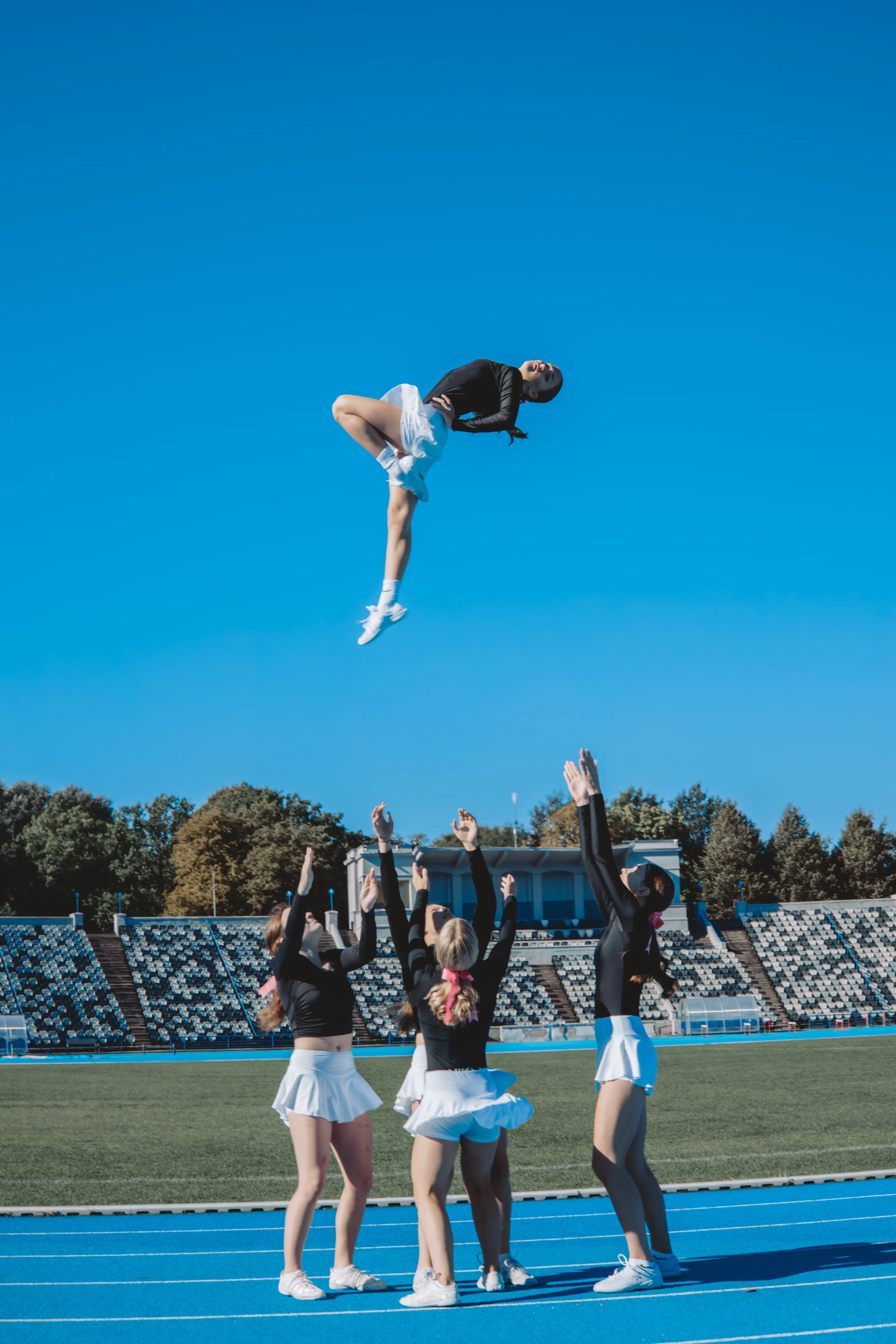
![Cheerleaders 2]()
North Stars youth team photoshoot
What motivates you to continue even during busy periods?
We have clear rules in the team – absences are allowed only due to illness or a valid reason. I expect this from my athletes, and I follow the same principle myself. Throughout the season, there are very few training sessions that I miss, because if I expect commitment from others, I must demonstrate it as well.
I like to think of it this way: I do not miss or arrive late to places I truly want to be. And training is exactly that kind of place for me.
In this kind of environment, discipline is key – consistency creates results. I am motivated by the knowledge that we are not just running training sessions, but moving towards something bigger. Each season is a step forward – a clearer system, a stronger team. And of course, exciting performances and competitions give visible meaning to all the work. That shared goal is what brings me to the gym even during the busiest periods.
Have you learned something important about yourself through these roles?
For me, the biggest lesson has been trust. I have learned to trust others – athletes, fellow coaches, and team members. By nature, I am someone who prefers to do things myself. It often feels faster and more reliable to do it alone, because then it turns out exactly as I envisioned. That is not always the best trait.
As a coach and leader, I have consciously learned to delegate tasks and give people the opportunity to contribute. In our teams, we have created systems where members can take responsibility for areas such as social media, costumes, or organising performances. This gives them ownership and an understanding that a team is not built only through routines, but also through everything surrounding them.
If you had to say in one sentence why it is important for a person to have something outside of work, what would you say?
Find a place where you can be truly yourself, without a role. 🙂
“I have learned a great deal through coaching about how to motivate people, how to have difficult conversations, and how to balance high expectations with support.”
Comment
Keit Arleen Kalle, TTC board member and Belinda’s friend
The main goal of TalTech Cheerleaders (TTC) is to develop cheer sport in Estonia and involve more children and young people in its activities. TTC has a total of eight groups across cheerleading and dance.
In 2024, Belinda and the TTC coed team (a mixed team of women and men – ed.) achieved eighth place at the World Championships. After that, she briefly set aside her athlete’s sneakers and took on a greater coaching role.
Belinda is the head coach of two cheerleading teams. She organises and conducts training sessions, takes her teams to performances and competitions, and does it all with the same enthusiasm as always. This season, she also joined the board of the non-profit association to further develop the organisation and youth sport.
Belinda also trains herself with great joy, setting a strong example for young athletes. Cheerleading training not only teaches how to technically perform elements correctly, but also provides lifelong skills – how regular training helps cope with everyday life, teaches time management, consideration for others, and at the same time creates relationships and friendships that last a lifetime.
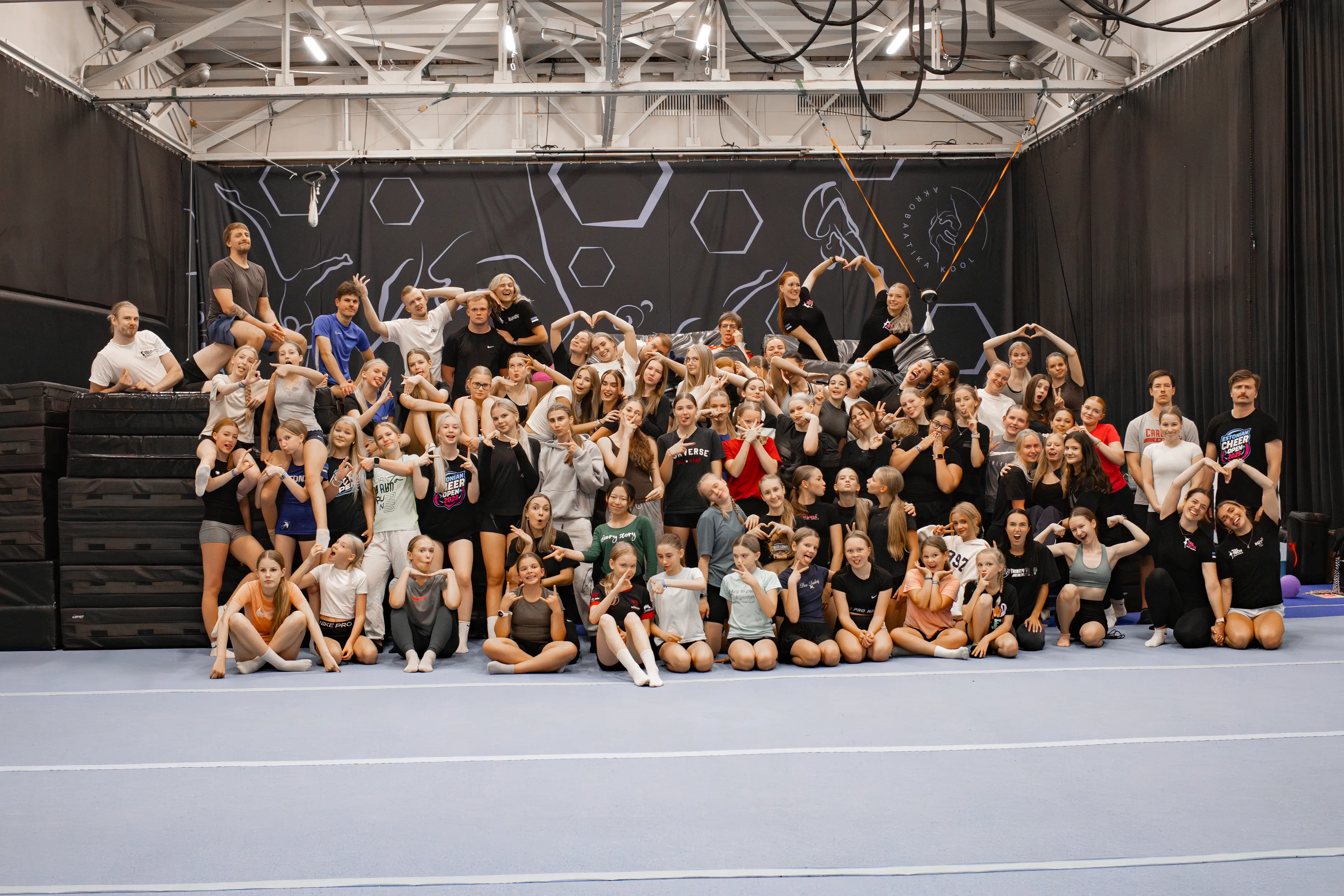
![Cheerleders]()
TalTech cheerleaders at the 2025/2026 season opening team event
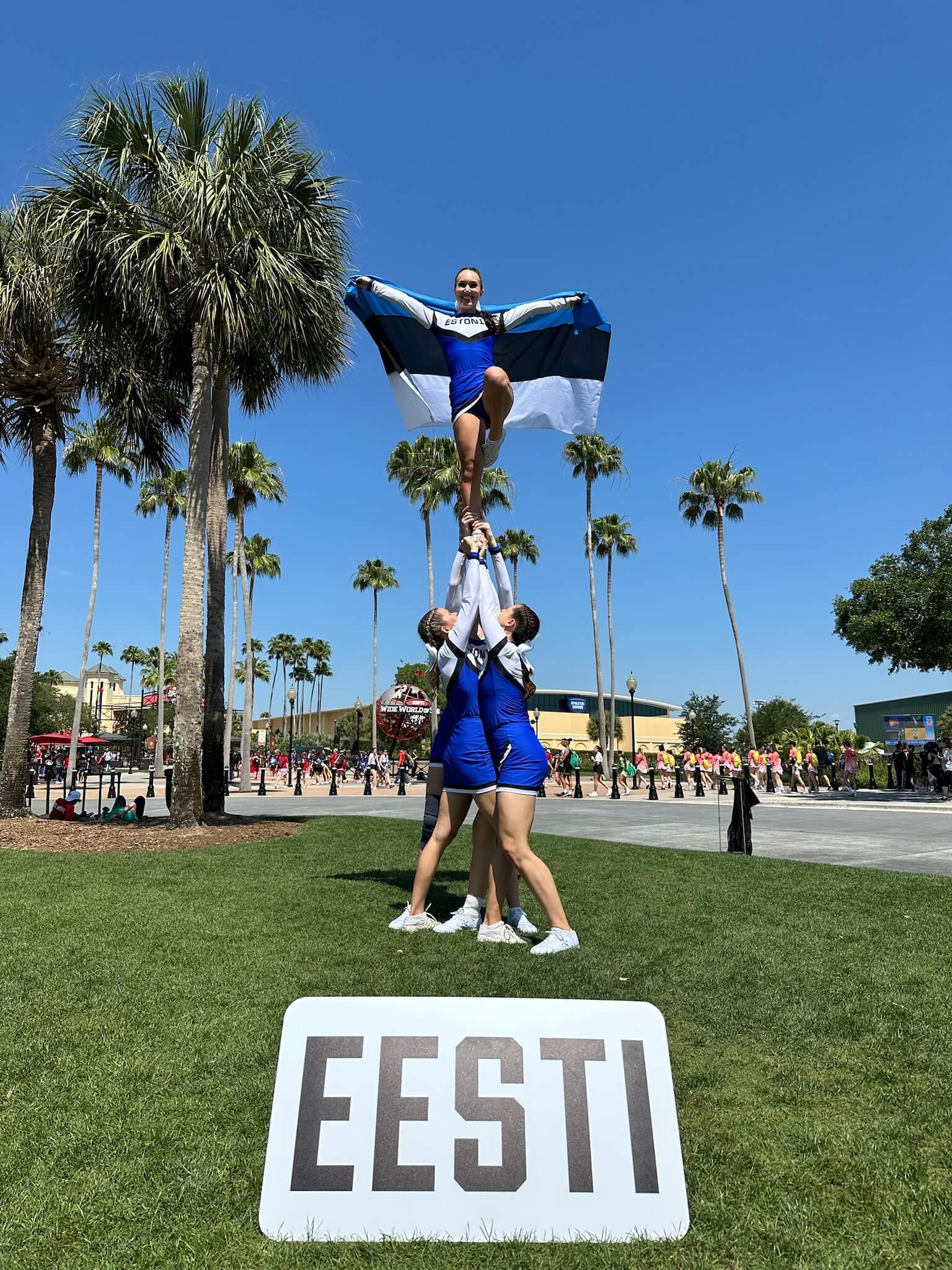
![Cheerleders]()
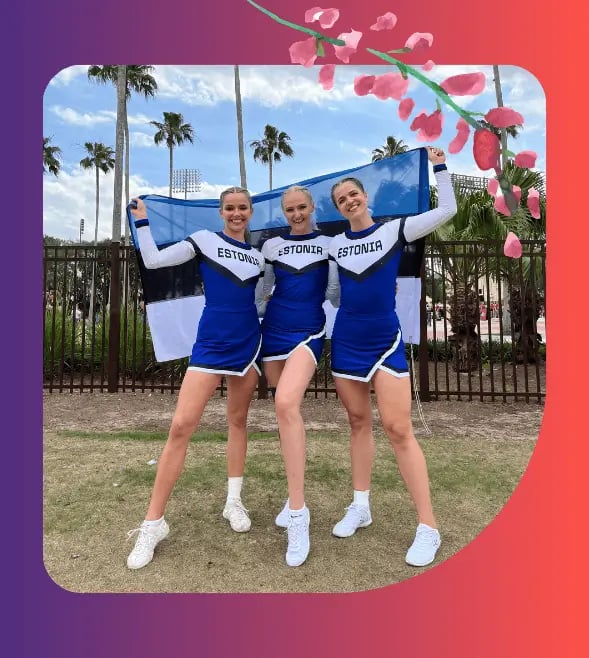
TalTech cheerleaders at the 2024 Cheerleading World Championships in the United States
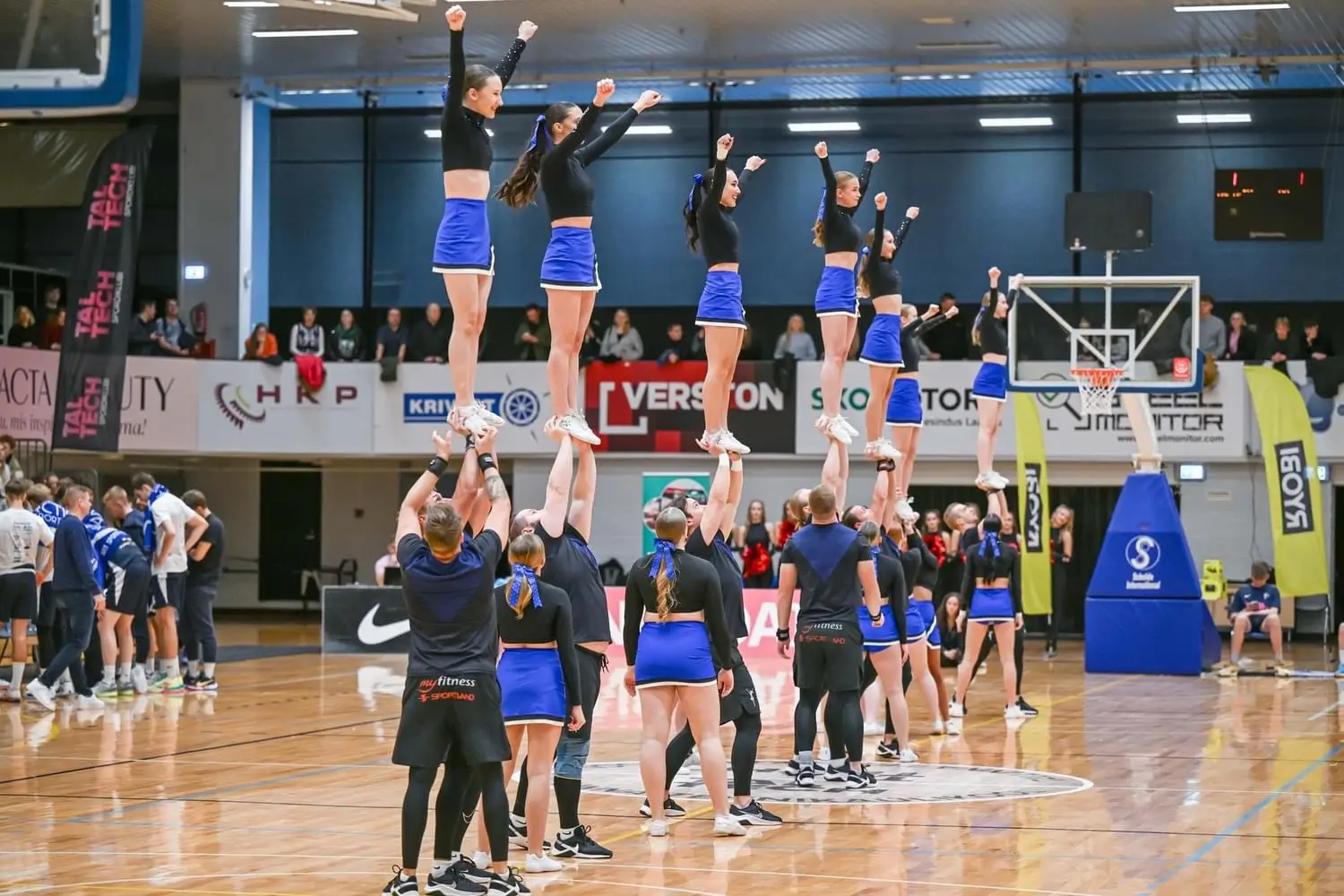
![Cheerleaders]()
TalTech cheerleaders at a TalTech/Alexela basketball game
Photos: Belinda Borodin’s private collection.
On the cover banner: TalTech cheerleaders at the 2024 Cheerleading World Championships in the United States.

 Belinda Borodin, who works as Head of Information Security, has a heart that belongs to sport. When the office door closes behind her at the end of the workday, you will soon find Belinda in the gym, where she coaches a sport that is still relatively uncommon in Estonia. However, her passion for the field suggests that its growth in recognition and popularity may not be far off.